
Two products. One connected workflow.
Building a contracting platform from the ground up: a subcontractor app and internal CRM, shaped into an actionable MVP in six weeks.
Senior product designer · Design owner
Subcontractors & the internal project management team
Ground-up discovery, product design, v0 prototyping & handoff · Six weeks
Product ownership · MVP prioritization · AI-assisted prototyping
A closer look at the problem.
bhild needed a platform from the ground up: an app for subcontractors to find jobs, bid, message, and track payments, and a CRM for the internal team to manage the same work. Operations ran on scattered tools and manual handoffs, and both sides had to show the work consistently.
Where I made a difference.
- Design owner for both the subcontractor app and internal CRM
- Led discovery, connected workflows, and interaction design
- Built the v0 prototype — the final deliverable that went to build
- Wrote handoff docs and a system map; advised on MVP priorities, feasibility, and where AI fits
Understanding the problem, exploring the direction.
- Define the first scope. A ground-up platform tempts you to build everything. I scored each requirement by effort, recommended priorities, and aligned the MVP with product and engineering.
Turning insights into designs.
- Design the handoff, not just each surface. Every subcontractor action has a matching place in the CRM for the team to review and manage.
- Connect navigation to the contracting lifecycle. Jobs, bids, project conversations, tasks, and payments follow the work from first bid to final payment.
- Make the emerging product concrete, early. Clickable v0 flows gave the client real screens to react to; many iterations later, the prototype became the build.
- Prioritize an MVP with room to grow. Effort-scored priorities set the MVP, with AI explored for alerts, issue routing, and proposal scope.
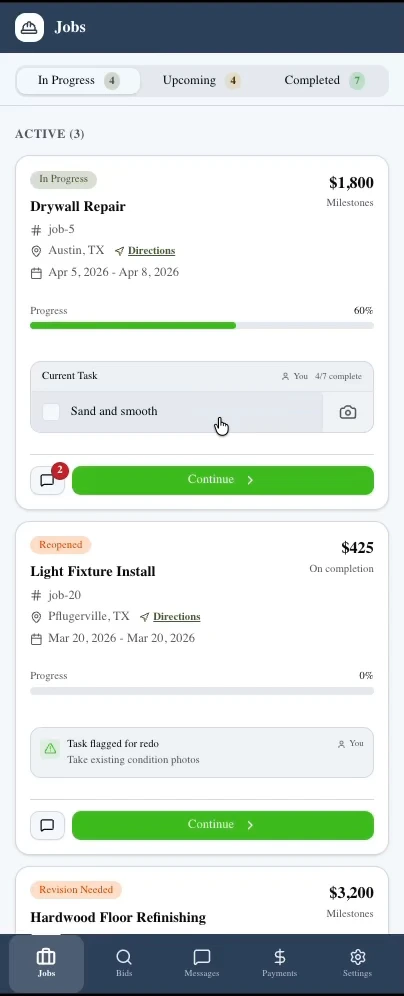
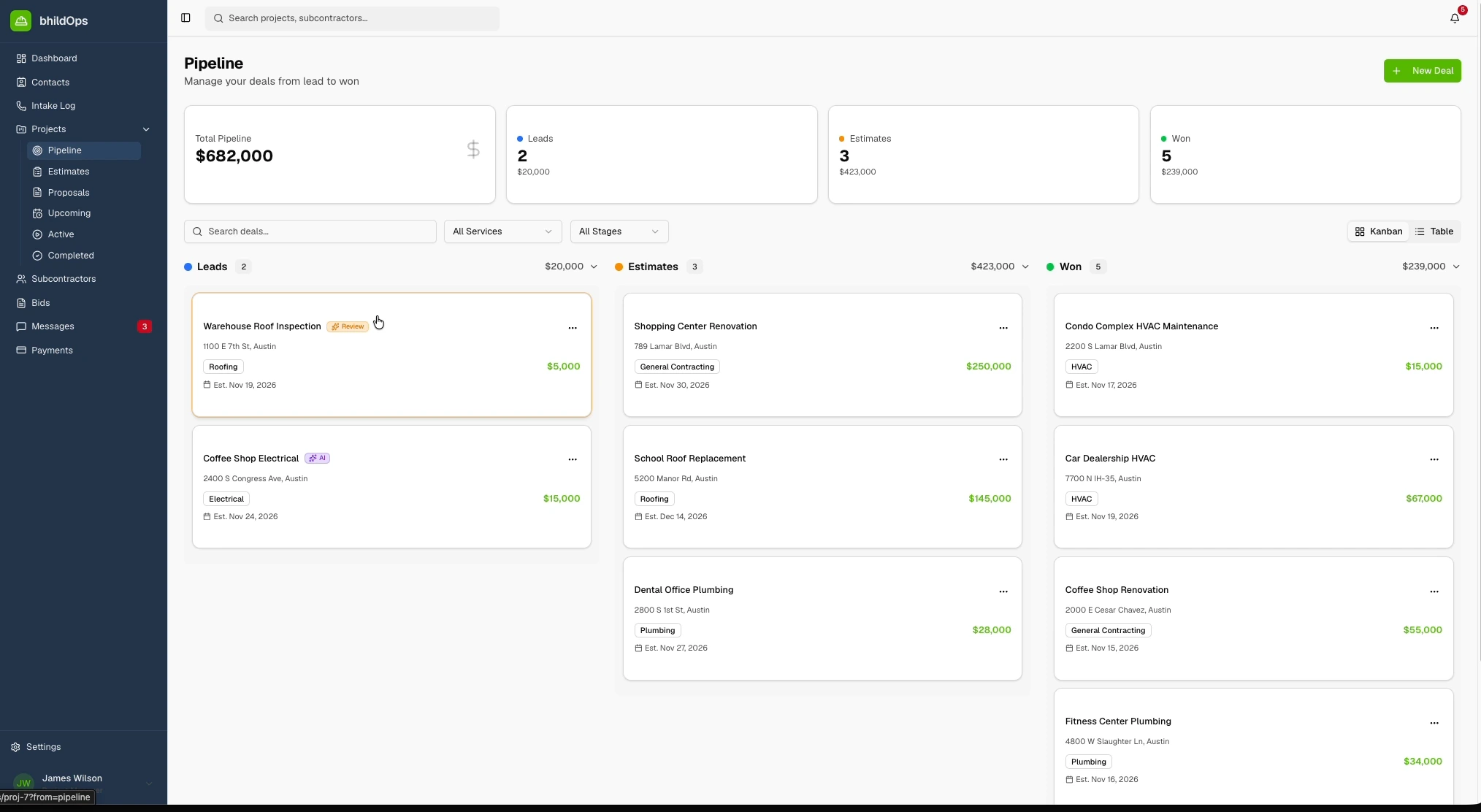
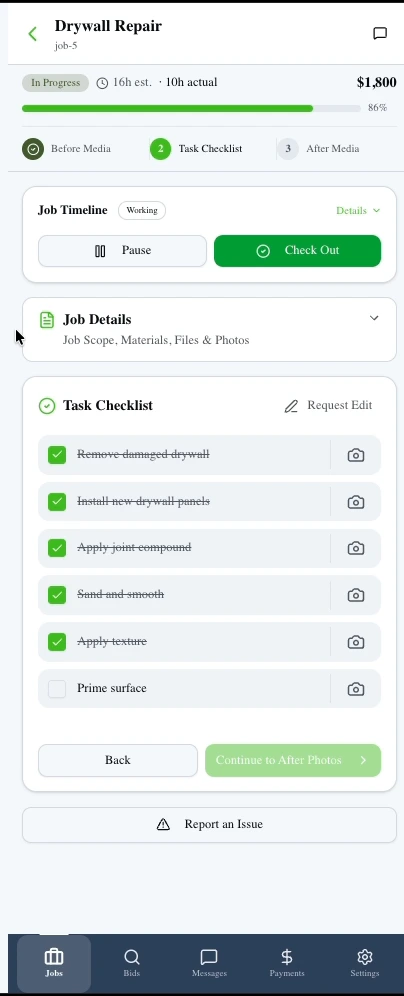
The CRM and the app share the same picture of the work — projects needing attention on one side, active jobs and the next task on the other.
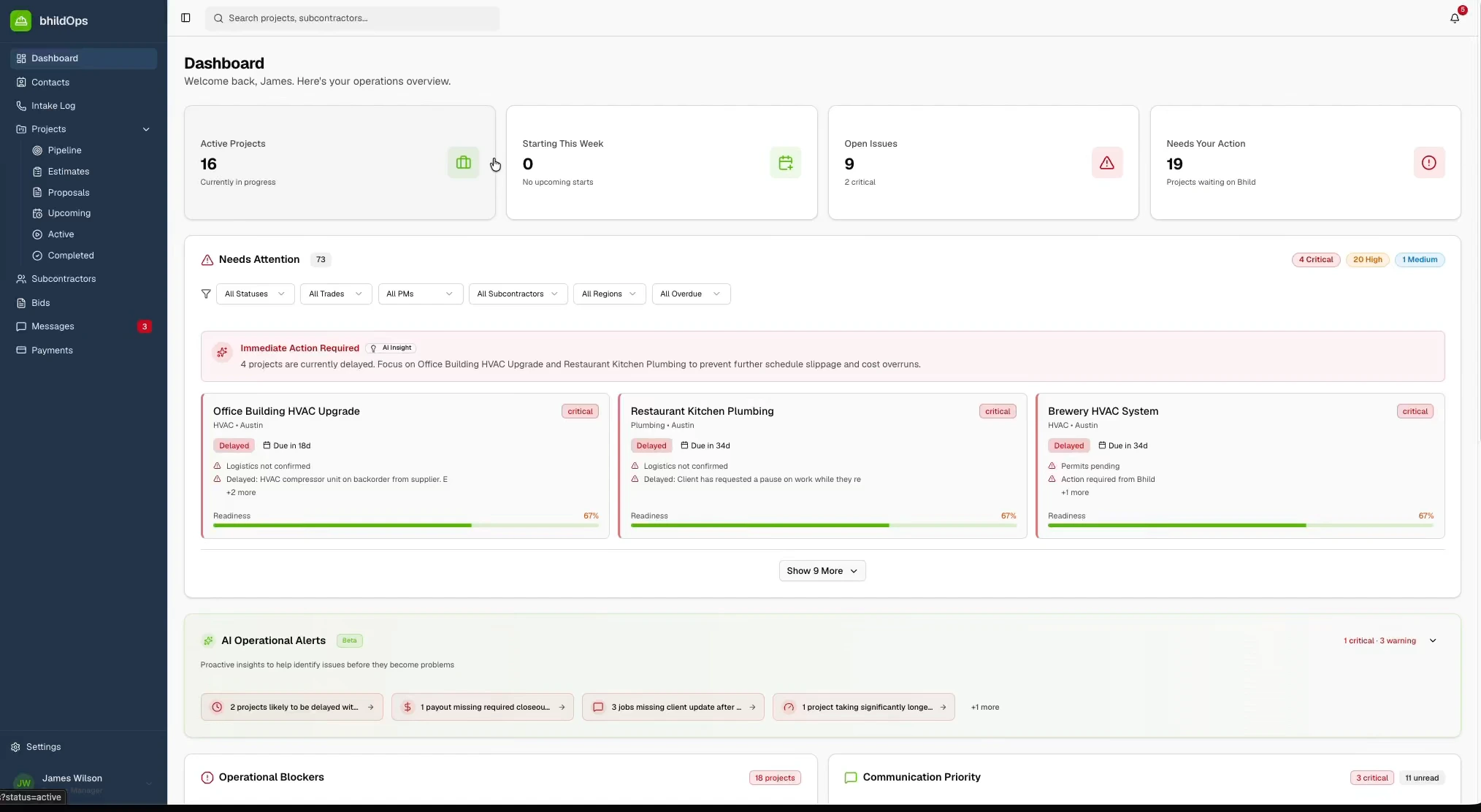
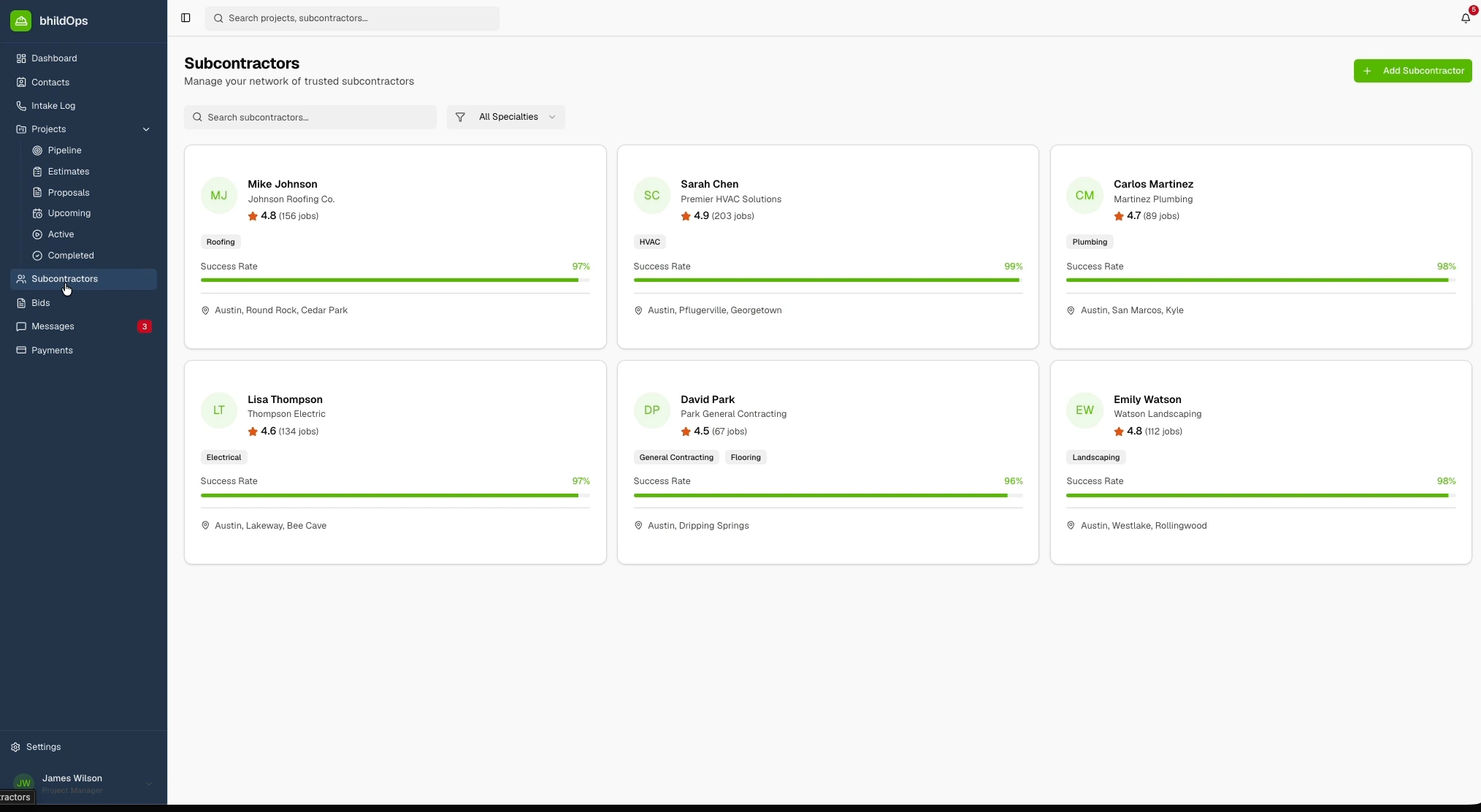
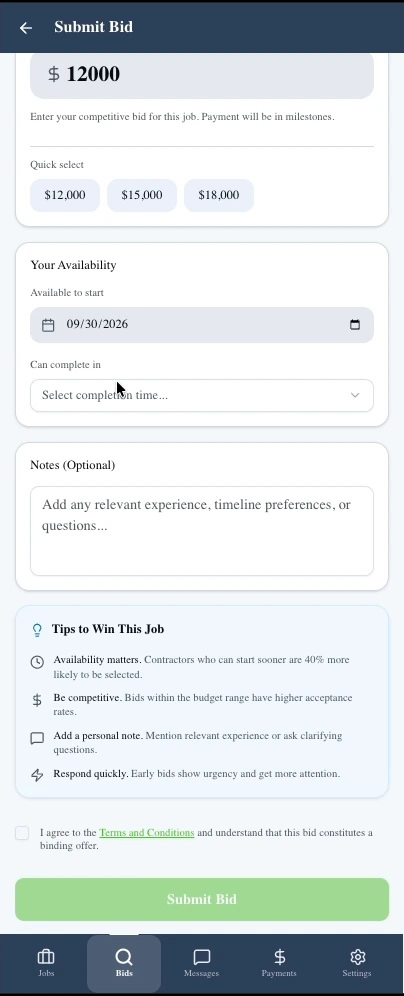
Subcontractors compare available work and place bids; the internal team reviews every submission in a matching space.
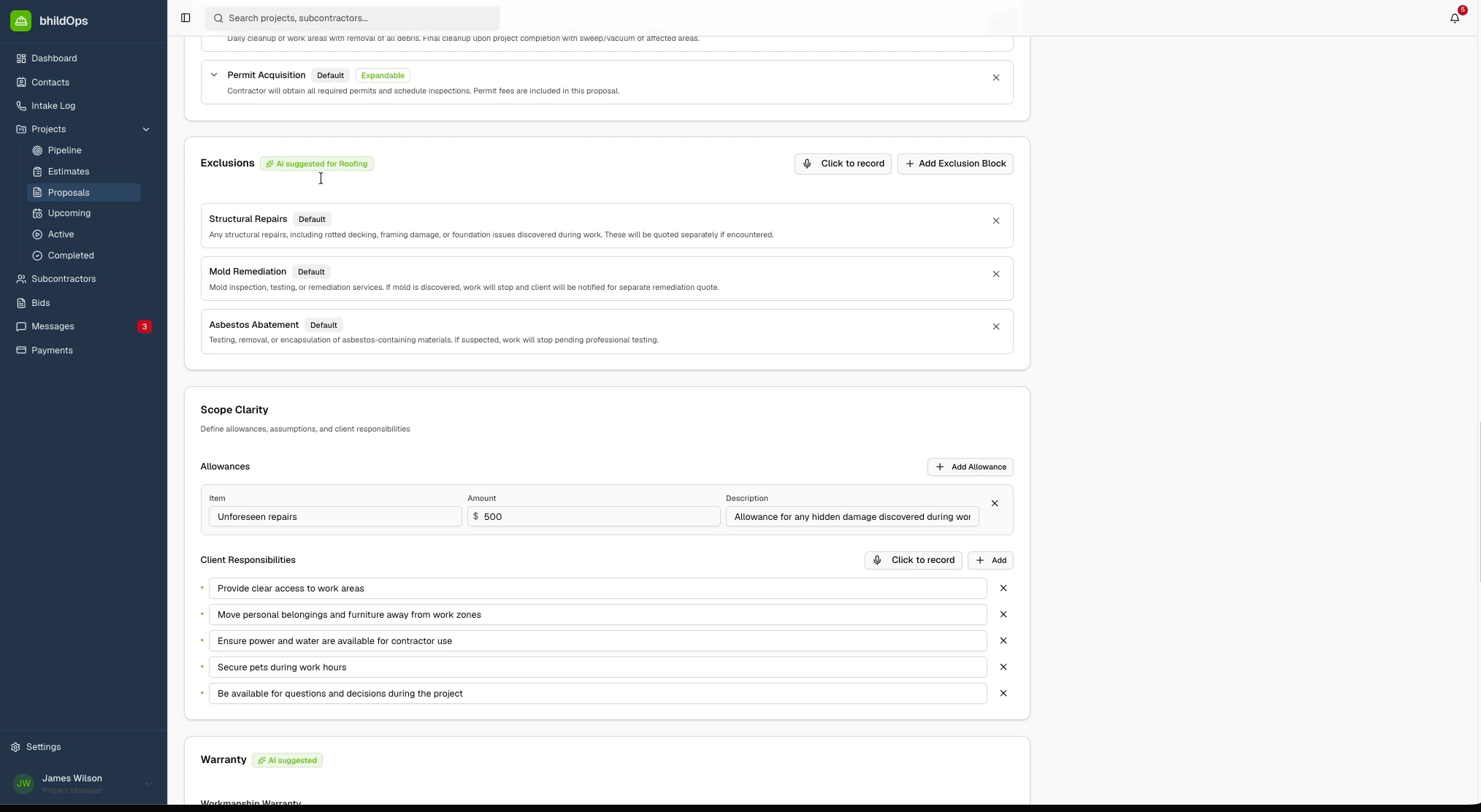
Price, availability, completion time, and notes on one side — work packages, exclusions, and project details on the other.
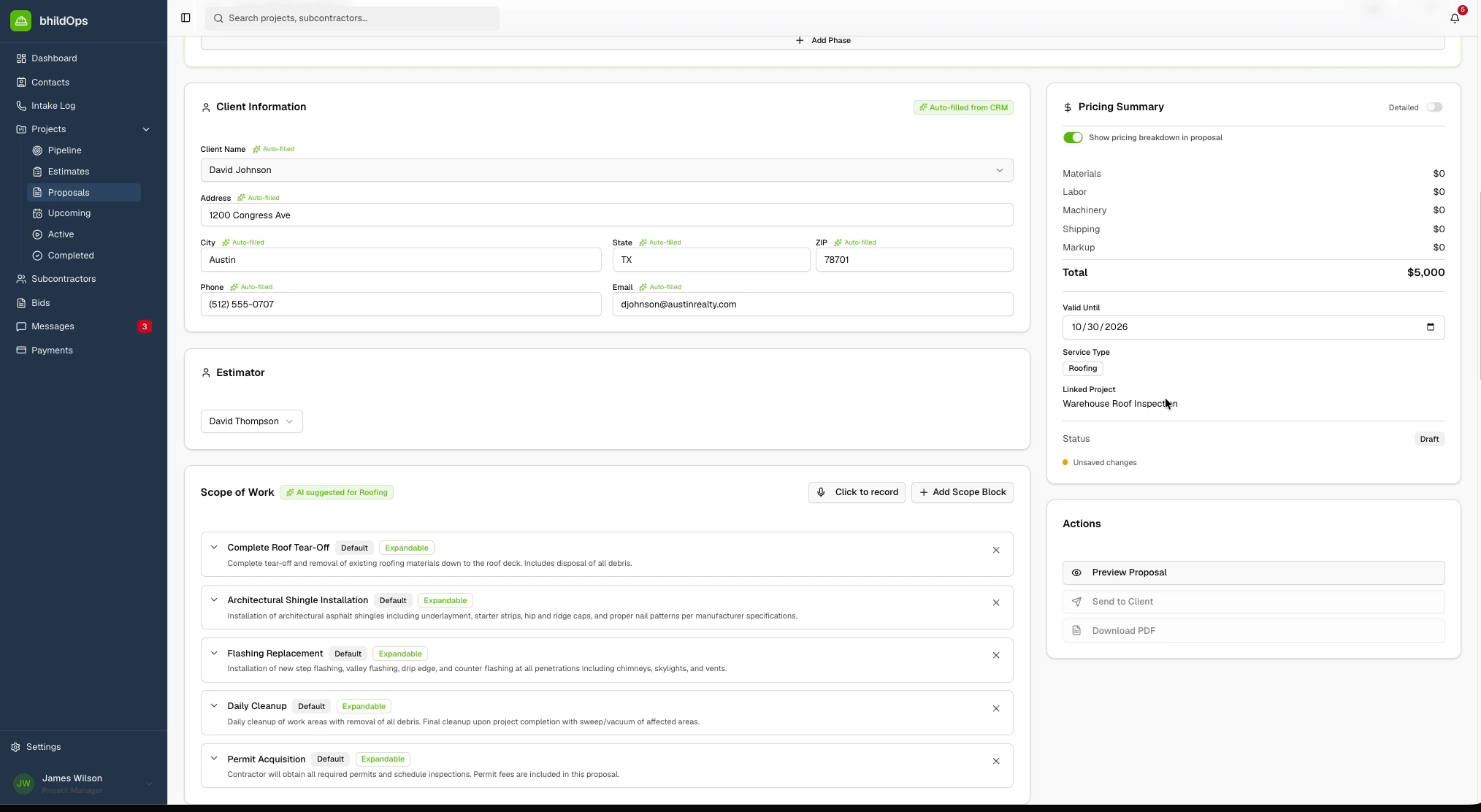
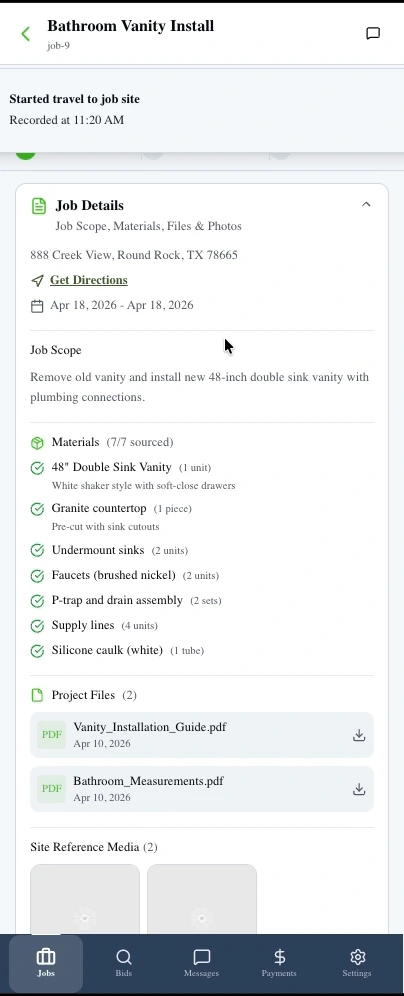
Shared scope, timeline, and readiness in the CRM; job scope, progress, and on-site actions in the app.
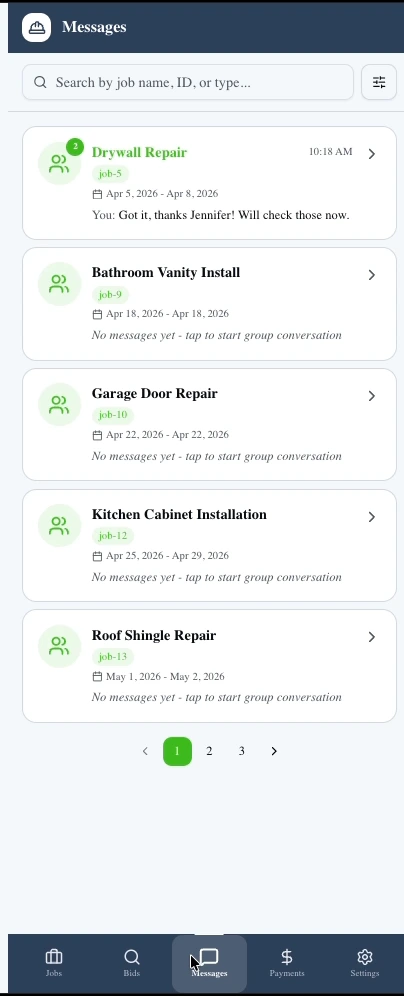
Project conversations stay attached to the job, so messages never drift away from the work they’re about.
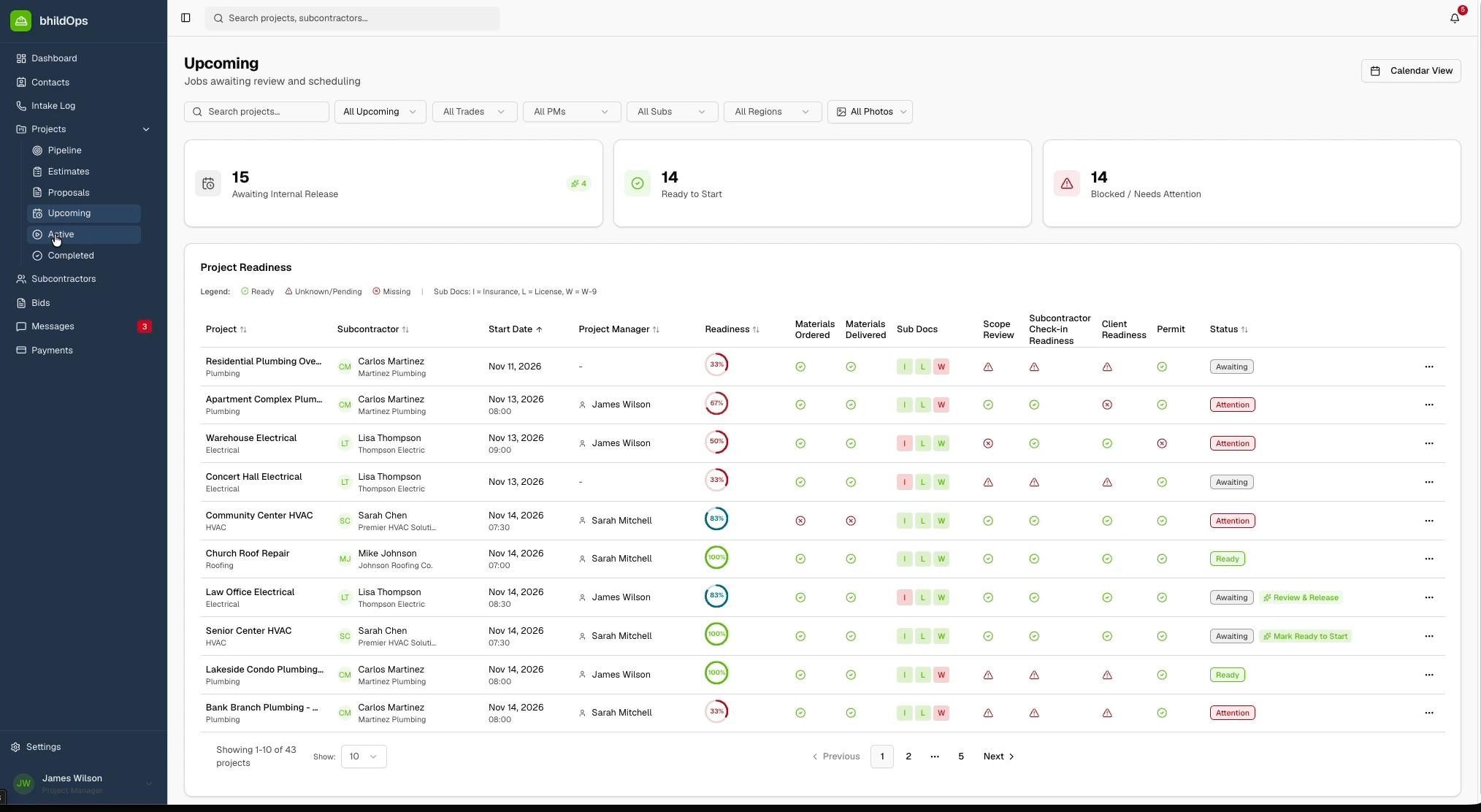
The prototype explores AI-suggested exclusions and scope clarity — assistance the team can inspect, not a black box.
What changed. What stayed with me.
- 6 weeks
- Discovery through handoff
- 2
- Connected product surfaces
AI-assisted delivery duration, from discovery to handoff—not a measure of post-launch efficiency.
- Scattered tools split the work.The final v0 prototype connects subcontractor actions with CRM review, from bids through project conversations and payments.
- Manual handoffs hid the connections.A system map and handoff documentation record how both products share workflows, giving engineers a connected foundation to build.
- A broad vision needed a first scope.Effort and feasibility informed MVP priorities, with a clear basis for extending the CRM later.
Pre-launch — adoption, time saved, and revenue impact require launch data.
A note to carry forward
Product ownership means making a broad vision specific enough to build — and keeping both sides of the platform in view while deciding what comes first.
Making AI-assisted incident reporting easier to trust.
Expanding a basic chatbot concept into a guided reporting experience, with form prefilling, contextual help, and clearer ways to review AI assistance.