
Understanding the people behind the membership.
Turning member interviews, gym visits, and competitive research into a foundation for a more human fitness experience.
UX researcher · Discovery strategy
Members, prospective members & staff
Website research & recommendations
Discovery · Research strategy
A closer look at the problem.
Before redesigning its website, EōS Fitness needed to know who its members really were and where their journey broke down — and to test the team’s assumptions about its audience.
Where I made a difference.
- Led a Baymard assessment and a ten-brand competitive SWOT
- Planned interviews and visited gyms across three states
- Turned findings into four personas, three journey maps, and recommendations
Working within the real world
Limited time and budget shaped the research plan. Misalignment around the target audience made it especially important to bring direct member evidence into the conversation.
Understanding the problem, exploring the direction.
- Get closer to the member experience. Gym visits and interviews covered the experience before, during, and after joining.
- Look beyond the direct competition. Ten brands showed which conventions served members and which didn’t.
- Turn research into a shared language. Personas and journey maps made findings easy for the whole team to use.
Interviews and gym visits challenged a single audience assumption. These four archetypes gave the team a shared way to discuss equipment, value, coaching, and family needs.
Felix designs his own workouts and values price and equipment variety. His persona keeps independent training needs visible alongside services such as personal training.
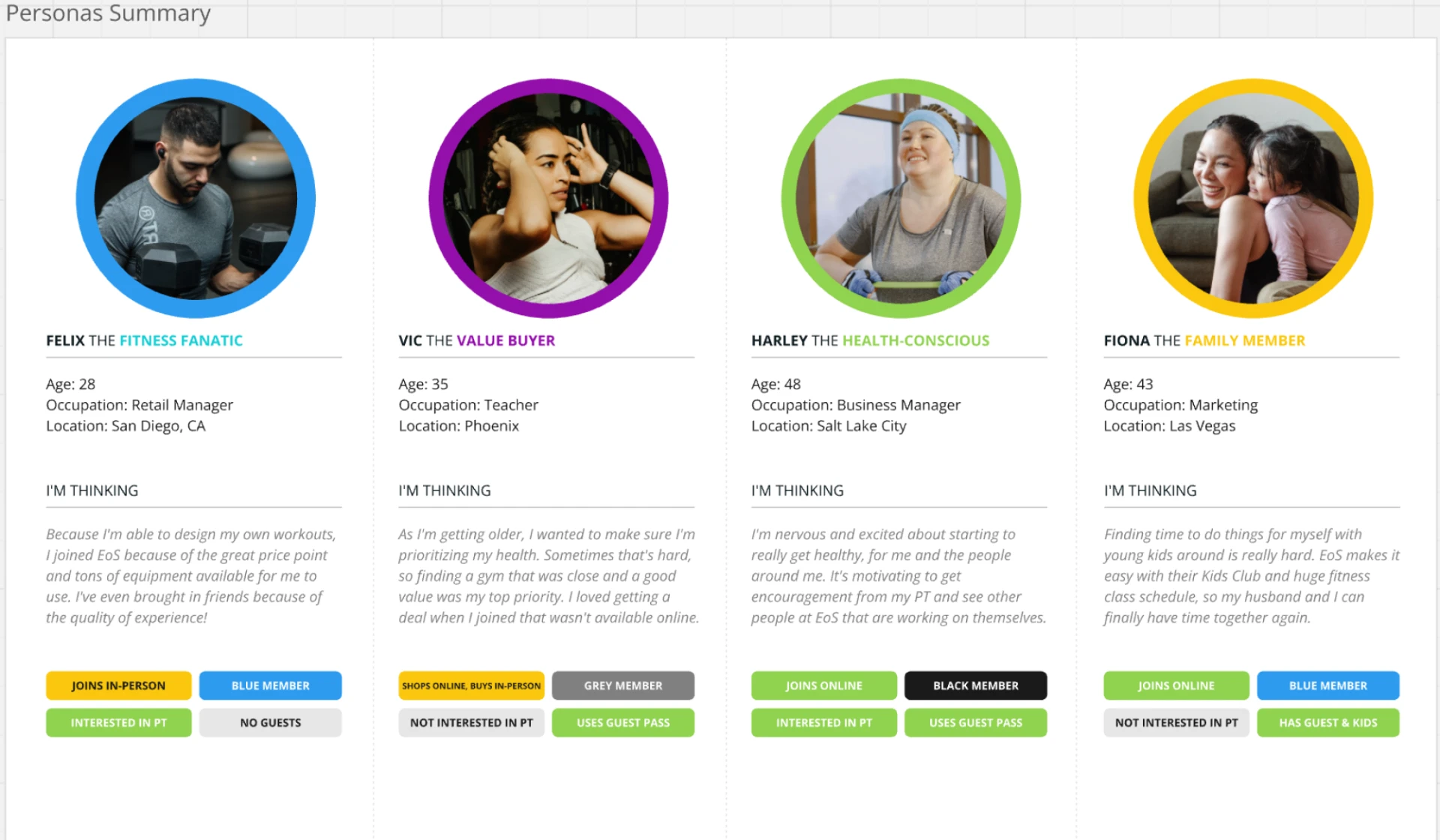 Four research-informed member archetypes, assembled into the original persona summary.
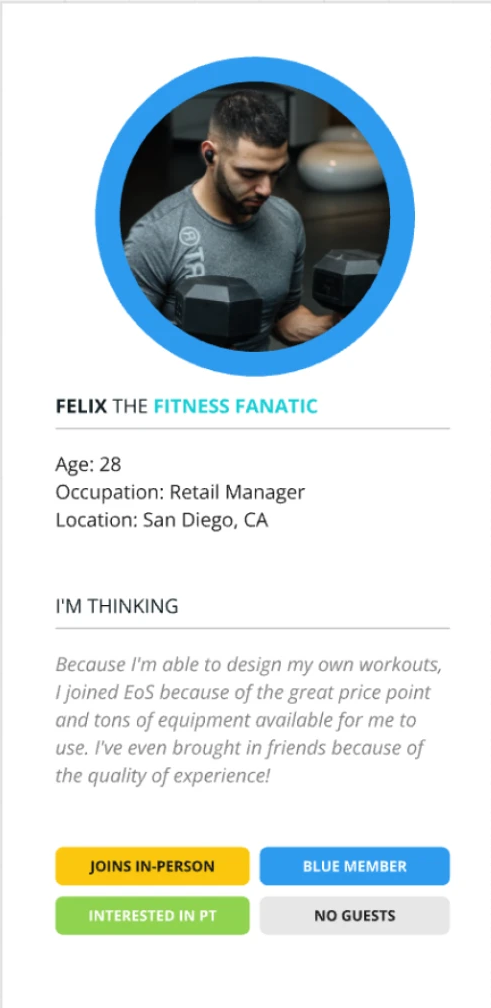
Felix designs his own workouts and values price and equipment variety. His persona keeps independent training needs visible alongside services such as personal training.
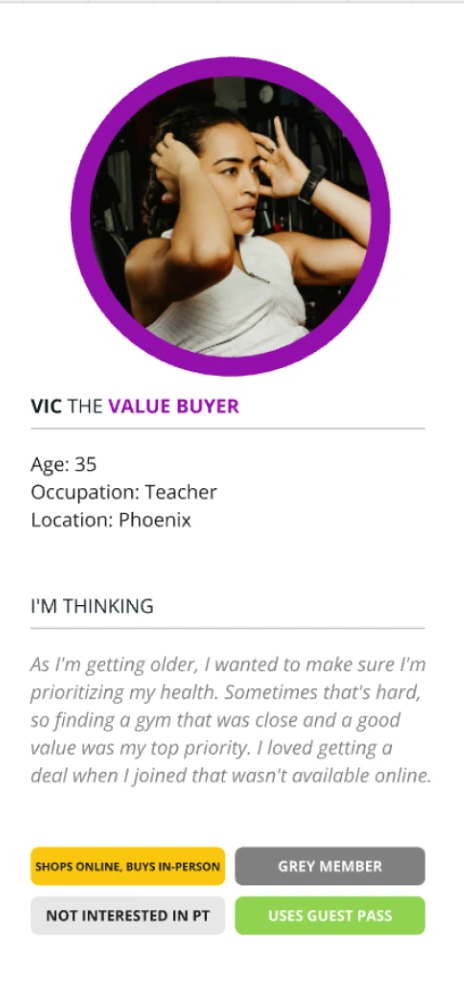
Vic researches online but joins in person. Finding a nearby location and understanding membership value matter before committing to a plan.
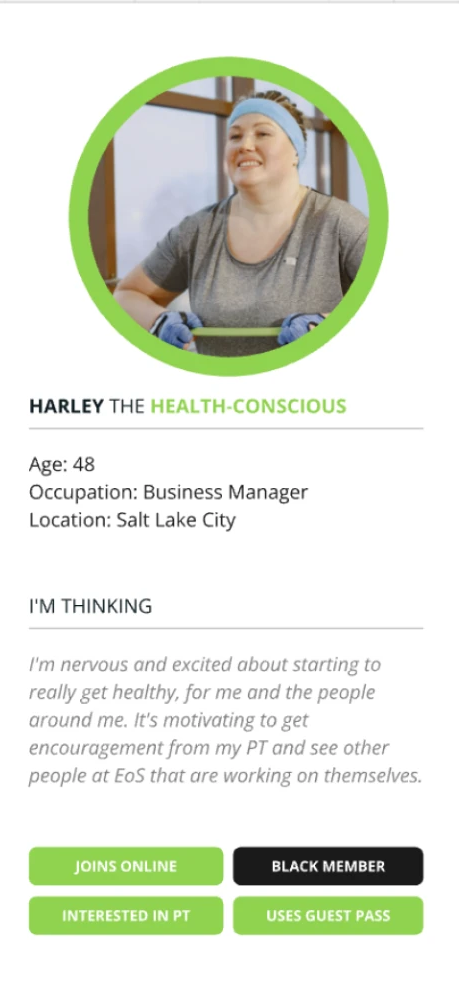
Harley is nervous and excited about getting healthy. Coaching and encouragement make the experience different from equipment-first training.
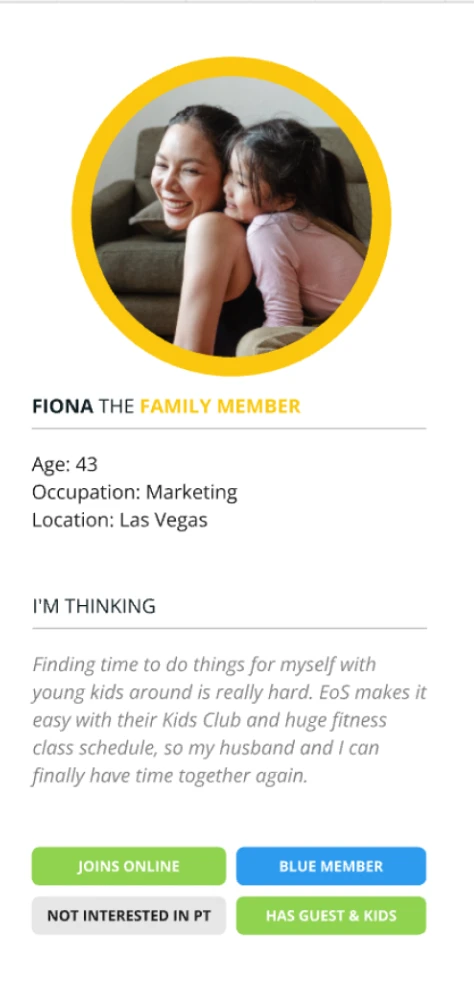
Fiona needs time for herself without losing family time. Kids’ Club and class schedules help her judge whether the gym fits everyday life.
The journey map connects what prospective members tried to do with their changing confidence. The important question was not just where they clicked, but what they still could not find.
The journey begins with location search. Members look for a nearby gym and relevant amenities; the map records both the actions and the early uncertainty around finding information.
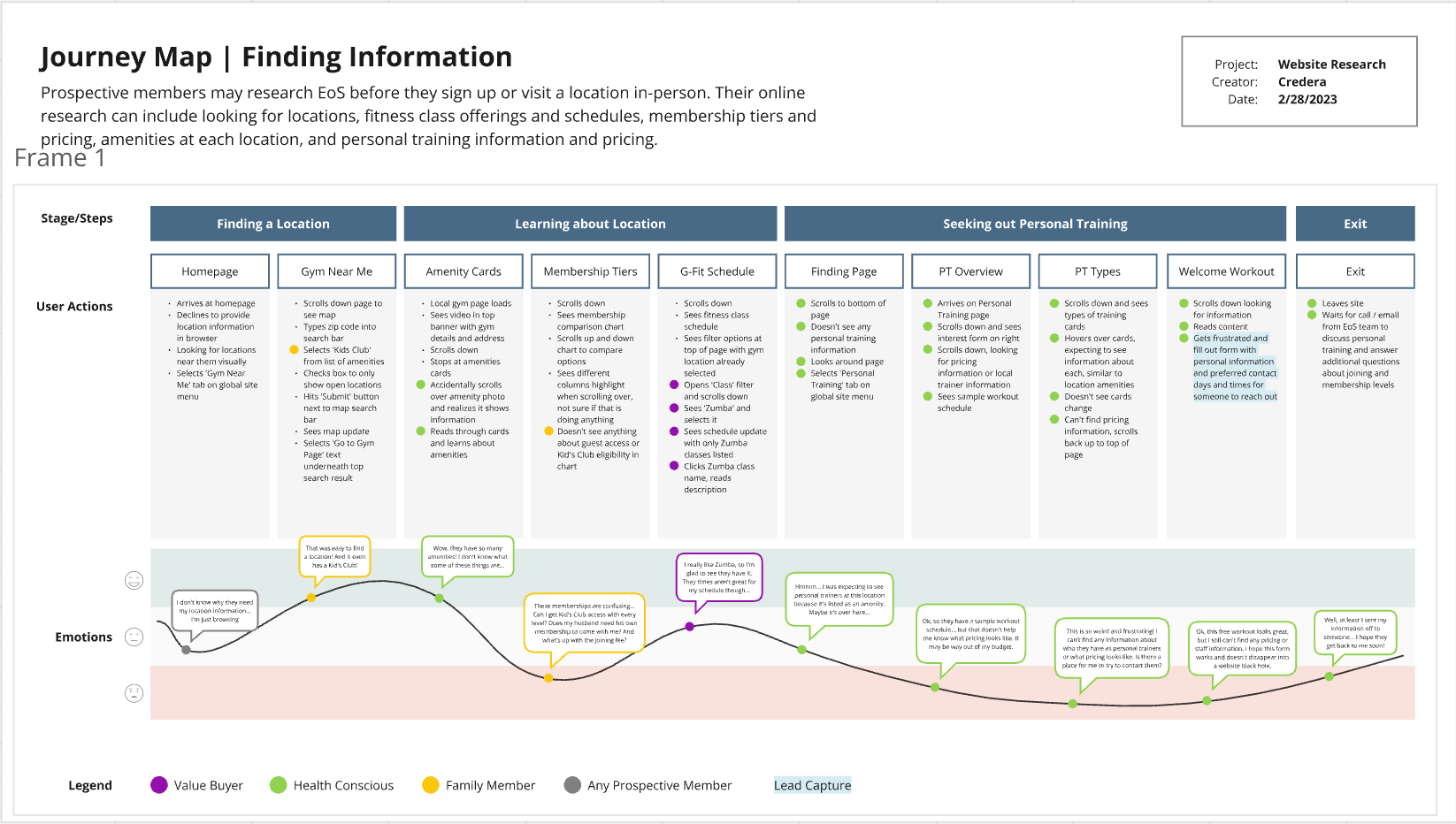 Finding-information journey: location, amenities, membership, classes, and personal training.
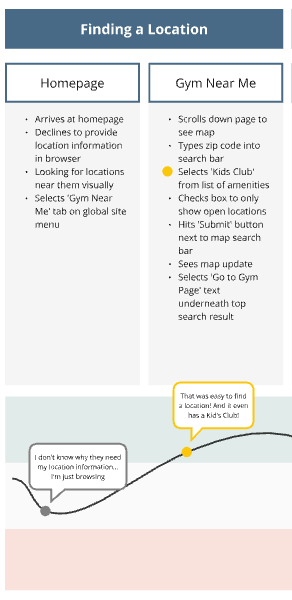
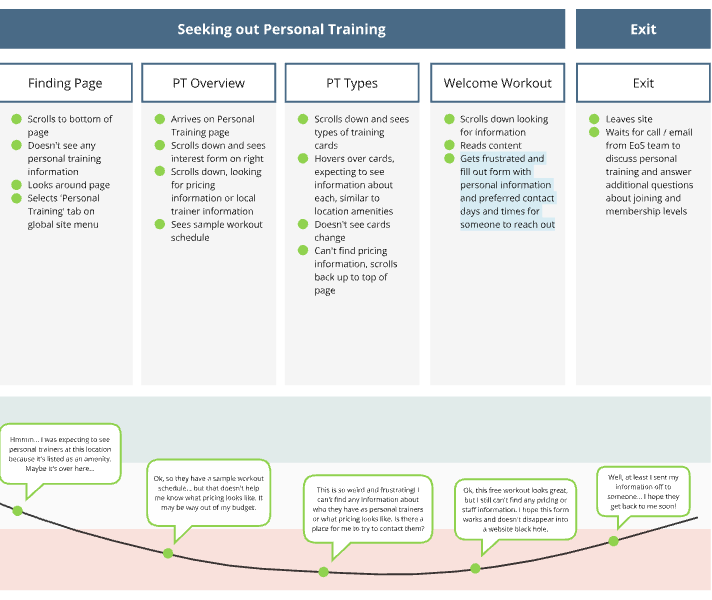
The journey begins with location search. Members look for a nearby gym and relevant amenities; the map records both the actions and the early uncertainty around finding information.
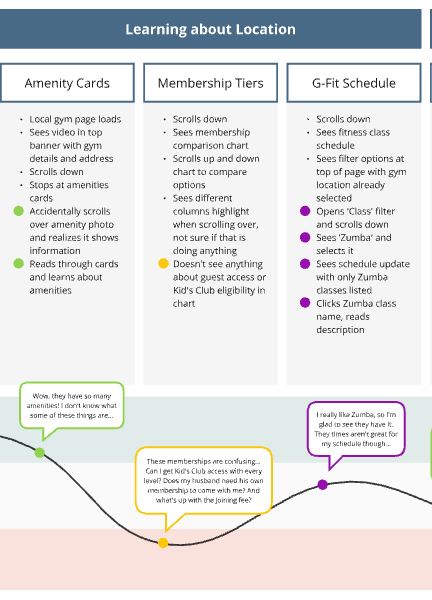
Amenities, membership tiers, and class schedules sit together in this part of the journey. Confusing plan comparisons and schedule discovery turn browsing into extra work.
Personal-training information and pricing remain hard to locate. Confidence drops, and the journey ends with an inquiry rather than all the answers online—making clearer information a recommendation for the overhaul.
The ten-brand comparison showed pricing and plan selection appearing earlier in competing checkout journeys. This supported a recommendation to make the commitment understandable before asking for more personal information.
Supporting research · interviews, synthesis and assessments
The source material behind the personas, journey findings, and website recommendations.
How the research informed design.
Make amenities easier to discover. Members came with different goals; the amenities carousel brings the gym’s offering into a guided browse instead of asking visitors to piece it together.
Make amenities easier to discover. Members came with different goals; the amenities carousel brings the gym’s offering into a guided browse instead of asking visitors to piece it together.
Show the people behind the gym. The “Overachievers” member feed connects the website to the community observed during gym visits. This is a design direction, not a measured engagement result.
Keep plan choices and costs in view. Research exposed confusing membership comparisons, while competitors surfaced pricing earlier. The checkout direction pairs plan choices with a clear summary.
What changed. What stayed with me.
- Audience assumptions divided the team.Member interviews and gym visits informed four personas, giving later design decisions a shared, evidence-based view of the audience.
- The team needed to locate journey breakdowns.Three journey maps traced finding information, trying a free pass, and checkout, turning friction into recommendations for the website overhaul.
Research and recommendations informed later design work; no measured conversion or membership impact is claimed.
A note to carry forward
Research isn’t about the volume of artifacts — it’s giving a team a shared understanding of the people they design for.
From local news to a daily habit.
Reimagining how readers discover, follow, and return to local journalism across 72 markets.